Romanians usually eat a savoury breakfast built on bread: butter and jam, eggs, fresh tomatoes, cucumbers and peppers, cold cuts such as parizer, ham or salam de Sibiu, and a white cheese like telemea, often with fried smoked sausages on the side. In the countryside the base can be mămăligă, a maize polenta eaten with cheese and sour cream; in the cities plenty of people take a cheese pastry or a covrig, the Romanian pretzel, on the way out. There isn’t one typical Romanian breakfast, and it changes from region to region and between village and city. Our two brunch spots in Bucharest serve something different, a brunch menu from 09:00 every day, and the last part of this guide sets the two side by side. Every Romanian dish below names the public source we took it from, and the links are listed at the end.
The traditional Romanian breakfast plate
The clearest description we found is Monica Suma’s piece on the Romanian breakfast for Roads & Kingdoms. She starts by saying there is no single version, since breakfast “varies from one region to the next, especially when comparing rural to urban areas”, and then names the common ground: “Across the nation, we all agree on a spread of bread, butter, and jam served alongside a healthy portion of eggs.”
To that she adds vegetables, “tomatoes, cucumbers and peppers”, and an assortment of mezeluri (cold cuts) such as parizer, ham and salam de Sibiu. “Accompanying the plate, almost always, are fried smoked sausages.” Three more things make the table Romanian in her telling: Turkish-style coffee, eggplant salad, and telemea.
True Romania Tours, a Romania tour operator’s food guide, gives nearly the same list: “fresh bread, local cheese (telemea or brânză), tomatoes, cucumbers, eggs (boiled or scrambled), and cold cuts like salami or smoked ham.” In rural areas, it adds, breakfast often features homemade jams, fresh milk and herbal tea.
Telemea and the other cheeses
Telemea is the cheese on almost every list. Wikipedia’s telemea entry describes a Romanian cheese “traditionally made of sheep’s milk”, now also made from cow’s, goat’s or buffalo milk. Fresh, it is “a soft or semi-soft white cheese with a creamy texture and a tangy aftertaste”; aged, it turns “crisper, more flavoured and saltier”. Wikipedia’s Romanian cuisine article calls it “vaguely similar to feta”, and Roads & Kingdoms calls it “similar to the Greek feta cheese, only more pungent”. It is eaten as a table cheese and goes into omelettes and pastries.
Brânză simply means cheese, often a Romanian feta-style one (Chasing the Donkey). Cașcaval is firmer: “a semi-hard cheese made from sheep’s or cow’s milk”, in Wikipedia’s words.
Mămăligă: the countryside breakfast
Mămăligă is yellow maize flour boiled with water and salt, Romania’s polenta. Roads & Kingdoms says it “is often served for breakfast in the countryside, where people still eat traditionally”. Wikipedia’s mămăligă entry lists the usual ways to eat it: “with sour cream and cheese on the side (mămăligă cu brânză și smântână) or crushed in a bowl of hot milk”, or in slices pan-fried in oil or lard. A heartier version, bulz, is mămăligă baked with sheep’s cheese and sour cream (Wikipedia, Romanian cuisine).
The same entry quotes Dracula, where Jonathan Harker writes that he ate “a sort of porridge of maize flour which they said was ‘mamaliga’” for breakfast.
Spreads for the bread: zacuscă and salată de vinete
Two vegetable spreads are worth knowing. Our sources tie them to bread rather than to breakfast in particular (though Wikipedia notes that the word zacuscă comes from a Slavic word for an appetizer, breakfast or snack), so read this section as “what is in the jar”, not “what every Romanian eats at 8am”.
- Zacuscă is roasted eggplant, sautéed onions, tomato paste and roasted gogoșari, a Romanian red pepper, sometimes with mushrooms or carrots. Wikipedia’s zacuscă entry says families cook a large batch after the autumn harvest and preserve it in jars, and that it is eaten “as a relish or spread, typically on bread”. Chasing the Donkey puts it the same way: made in autumn and “served on bread throughout the rest of the year”.
- Salată de vinete, the eggplant salad Roads & Kingdoms counts among Romanian staples, is “finely chopped roasted eggplant, finely chopped onions, sunflower oil … salt and, optionally, mayonnaise”, according to Wikipedia. Unlike baba ghanoush, it has no tahini.
The city version: covrigi and merdenele
“In urban areas,” Roads & Kingdoms writes, “pastries and pies are a more modern, on-the-go breakfast, anything from merdenele (pastries with cheese) to covrigi.”
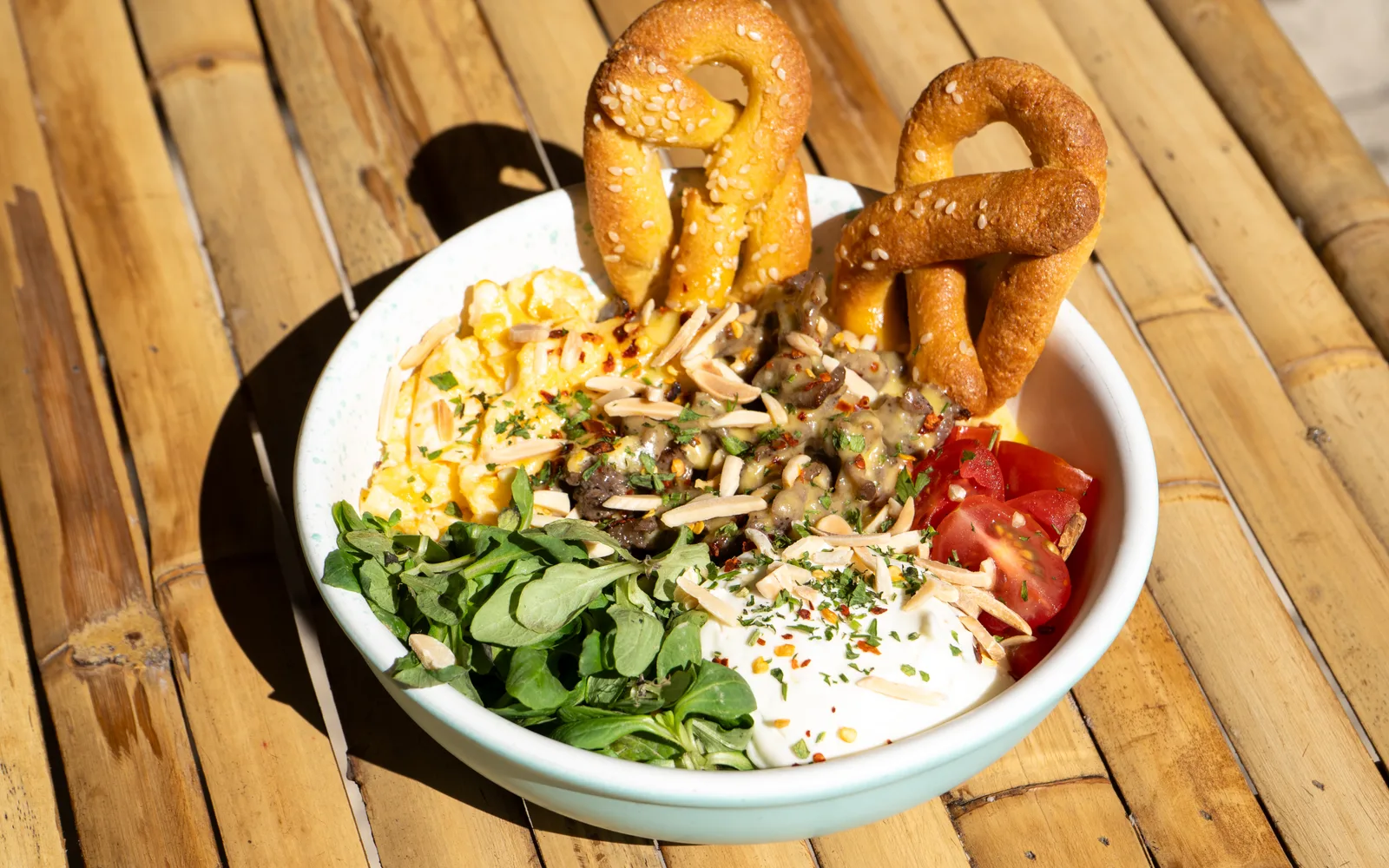
- Covrigi (singular covrig) are “Romanian baked goods similar to pretzels”, topped with poppy seeds, sesame seeds or large salt grains, and “a popular snack food in urban areas of Romania” (Wikipedia). The city of Buzău is known for them. Sidewalk Safari’s Bucharest food list calls them “the perfect affordable snack on the go”, hot from the oven and covered in seeds.
- A merdenea (plural merdenele) is a square or rectangular puff pastry “filled usually with salted cheese”, in the definition from Romanian Wikipedia.
The coffee that goes with all of this is, traditionally, Turkish-style. Roads & Kingdoms puts it down to “centuries of strife under sporadic Ottoman rule”, and the drinks list in Wikipedia’s Romanian cuisine article gives cafea as Turkish coffee, made in a cezve.
Romanian breakfast glossary
| Romanian | What it is | Source |
|---|---|---|
| telemea | White cheese, traditionally sheep’s milk, similar to feta | Wikipedia |
| brânză | Cheese, often a feta-style white one | Chasing the Donkey |
| cașcaval | Semi-hard sheep’s or cow’s milk cheese | Wikipedia |
| smântână | Sour cream | Wikipedia |
| mezeluri | Cold cuts | Roads & Kingdoms |
| parizer | A cold cut on the breakfast plate | Roads & Kingdoms |
| salam de Sibiu | Sibiu salami | Roads & Kingdoms |
| mămăligă | Maize polenta | Wikipedia |
| mămăligă cu brânză și smântână | Polenta with cheese and sour cream | Wikipedia |
| bulz | Polenta baked with sheep’s cheese and sour cream | Wikipedia |
| zacuscă | Roasted eggplant and red pepper spread | Wikipedia |
| salată de vinete | Roasted eggplant salad with onion and sunflower oil | Wikipedia |
| covrig / covrigi | Romanian pretzel / pretzels | Wikipedia, Sidewalk Safari |
| merdenea / merdenele | Puff pastry filled with salted cheese | Romanian Wikipedia |
| cafea | Coffee, traditionally Turkish-style | Wikipedia, Roads & Kingdoms |
Where our Bucharest brunch fits
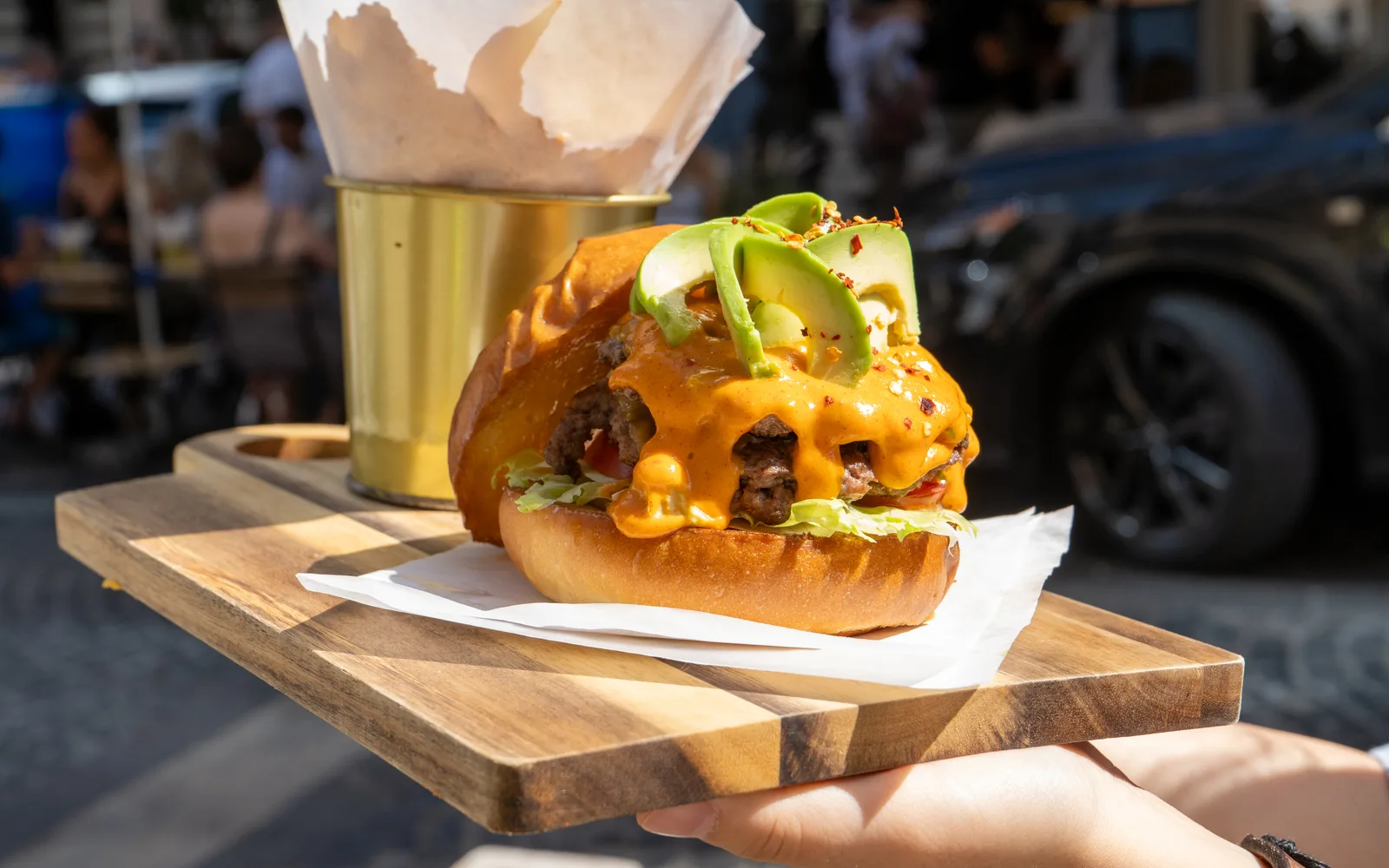
We serve none of the dishes above. Cookie Beacon is a brunch café, open every day from 09:00 to 18:00 at Amzei, on Strada General Christian Tell 1-3 near Piața Romană, and at Floreasca, on Calea Floreasca 91-111. Both cafés share one menu at the same prices. If you know the Romanian breakfast, this is how our card lines up with it:
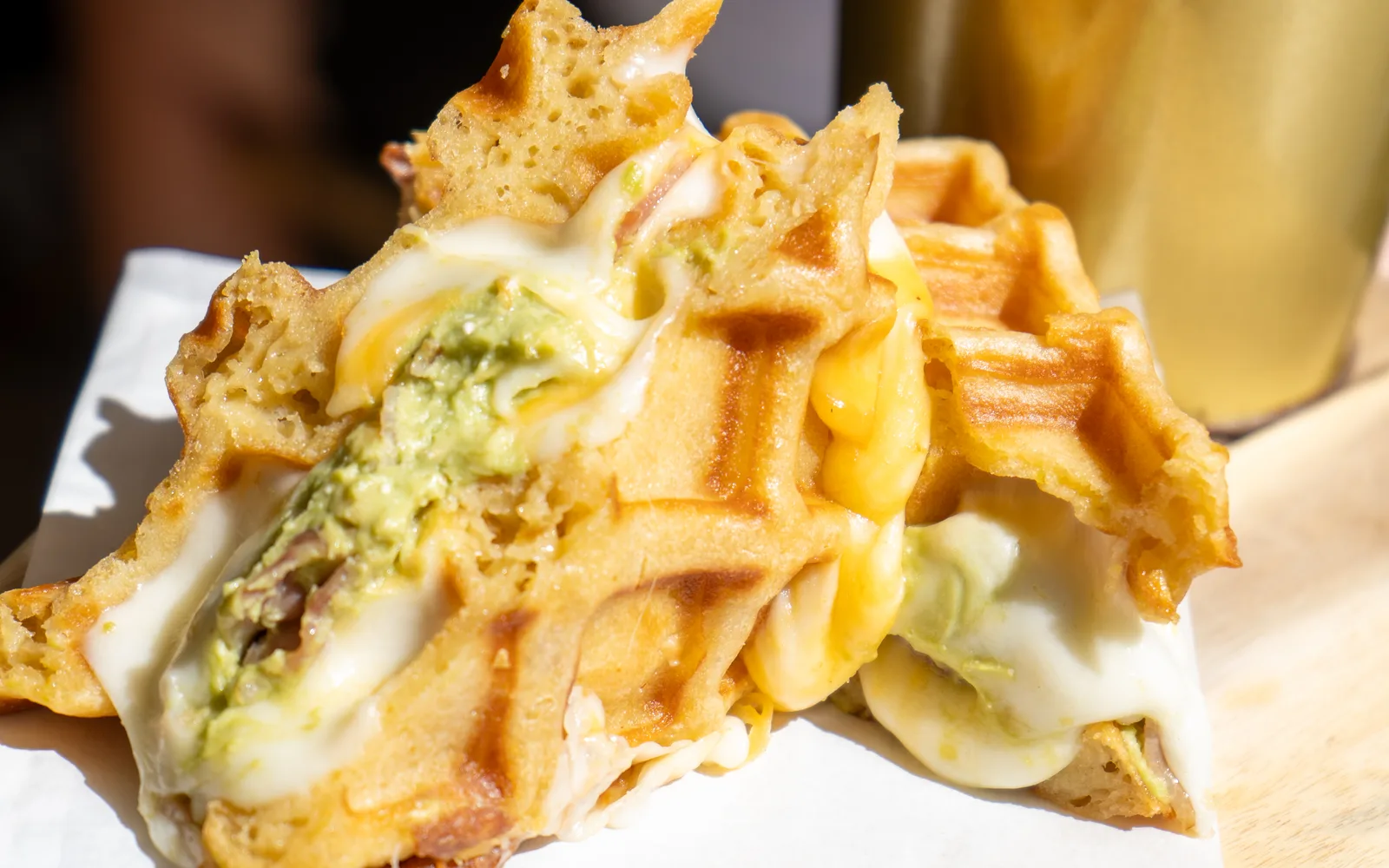
- Eggs. Eggs Benedict on Cheddar-Scones (51 lei) are poached eggs and hollandaise on cheddar scones with avocado mash and feta. The Croque Madame Pancake Stack (51 lei) puts a poached egg, bacon béchamel and tomato on fluffy pancakes.
- Tomato, pepper and white cheese. Shakshuka Burrata (59 lei) is a sunny-side-up egg in a spiced tomato and pepper sauce with feta crumble and homemade seed crackers. It is not a Romanian dish, but egg, tomato, pepper and a white cheese will look familiar.
- White cheese and bread. The Avocado Cheddar Scones (42 lei) are cheddar scones with avocado mash and feta (feta, not telemea), pomegranate, granola and a mixed salad.
- Covrigi. Our Breakfast Crunch Pretzelbun Sandwich (41 lei) is the closest thing to one; the Romanian card calls the bun tip covrig, covrig-style. Inside: tomato jam, jalapeños, corn chips, tomato, salad and cheddar.
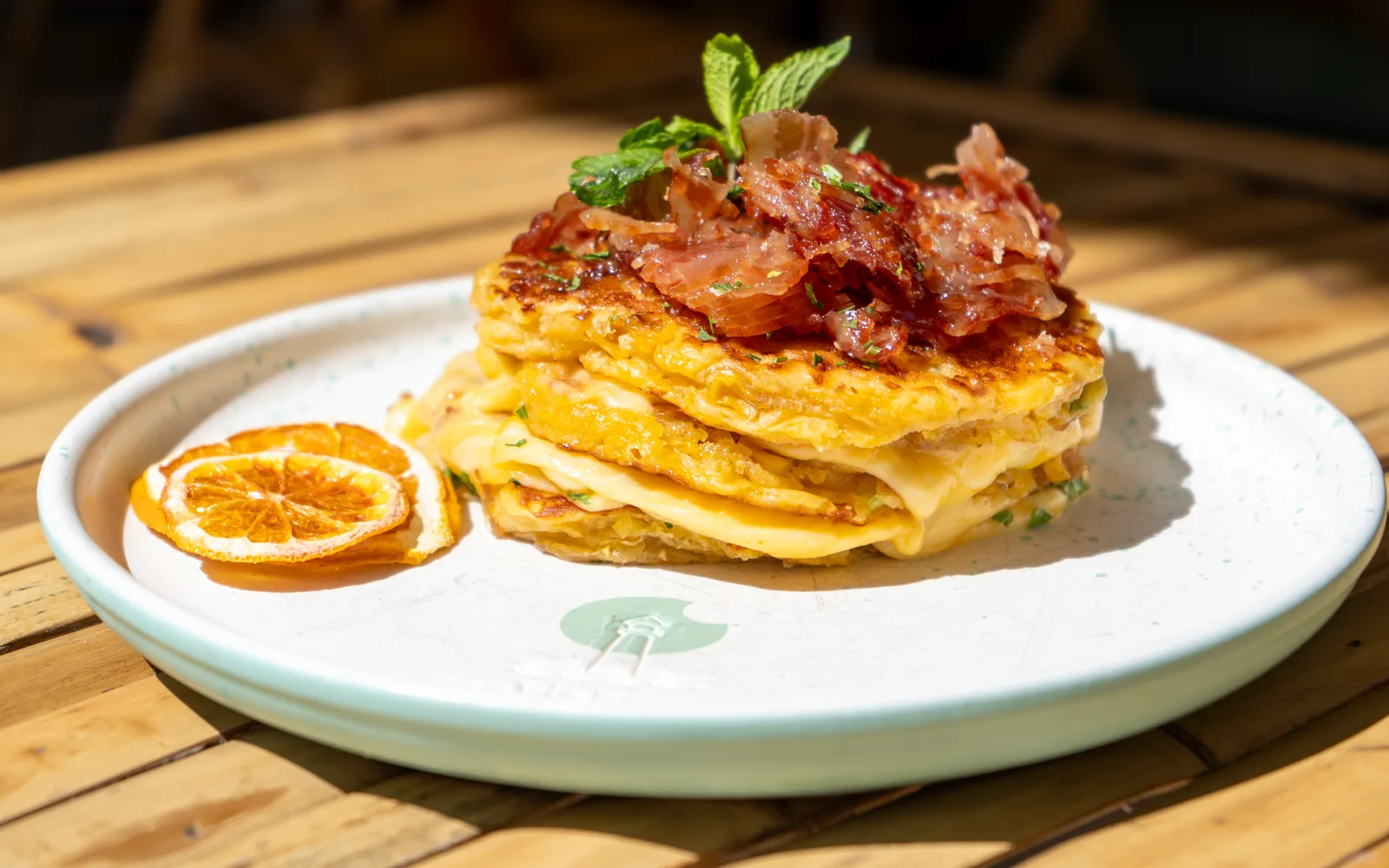
- Corn and cheese. The nearest we get is the Wild-West Breakfast Pancakes (56 lei): sweet-corn pancakes with a cheese mix, bacon and bacon syrup. It is not mămăligă.
- Something sweet. The Crème Brûlée French Toast (51 lei) is orange French toast with orange-infused cream and salted caramel. The Carrot-Cake Vegan Pancakes (51 lei) come with vegan mascarpone, strawberries and berry jam.
- Coffee. Ours is specialty coffee, light-roasted in Barcelona, not Turkish-style: an espresso is 11 lei, a cappuccino 17 lei, a flat white (double shot) 19 lei.
- Pastries. Merdenele and covrigi are not on our card. We bake handmade chunky cookies instead, 25 to 26 lei each, from Classic Choco Chip to Pistachio Cream & Crumbs.
For the Romanian version, pick up a covrig hot from the oven, or look for telemea, tomatoes and eggs on a Romanian breakfast table. If you want a sit-down plate of eggs and a specialty coffee from 09:00, that’s what we serve.
| Detail | Cookie Beacon Brunch Amzei | Cookie Beacon Brunch Floreasca |
|---|---|---|
| Address | Strada General Christian Tell 1-3, 010381 Bucharest | Calea Floreasca 91-111, 014455 Bucharest |
| Neighbourhood | Near Piața Romană, Sector 1 | Floreasca, northern Bucharest |
| Hours | Every day 09:00–18:00 | Every day 09:00–18:00 |
| Espresso | 11 lei | 11 lei |
| Cappuccino | 17 lei | 17 lei |
| Egg plates | Eggs Benedict on Cheddar-Scones 51 lei, Shakshuka Burrata 59 lei | Same menu and prices |
| Bookings | Walk-ins only | Walk-ins only |
| Full menu | Amzei menu | Floreasca menu |
Planning your first morning in Bucharest
Our first day in Bucharest food guide runs from brunch near Piața Romană to dinner, with lunch along Calea Victoriei in between. For the egg plates, the sandwich and the French toast in more detail, read our guide to breakfast at our two Bucharest brunch spots. Heading on to Hungary? Here is what Hungarians eat for breakfast, and for Belgrade, what Serbians eat for breakfast.
Sources, checked 14 October 2026: Roads & Kingdoms, Monica Suma on the traditional Romanian breakfast (2016); Wikipedia, Romanian cuisine; Wikipedia, Telemea; Wikipedia, Mămăligă; Wikipedia, Zacuscă; Wikipedia, Baba ghanoush (salată de vinete); Wikipedia, Covrigi; Romanian Wikipedia, Merdenea; True Romania Tours, Romanian food; Chasing the Donkey, Romanian cuisine; Sidewalk Safari, what to eat in Bucharest. Cookie Beacon dishes, prices and hours come from our own Bucharest menu and opening times.